

How thoughtful environments make room for children’s ideas
Creating a Child-Led Learning Environment
An environment should belong to the children – throughout September, we have been reflecting on the early years learning environment we create at The Nook. Not simply how a room looks, but what it allows children to do, discover and become.
A beautiful space can catch the eye, but that is not the measure that matters most to us. We ask different questions. Can children reach and choose resources for themselves? Is there room to move, rest, investigate and play with others? Can an idea travel from one area to another? Can a child return to something tomorrow and discover something new in it?
Because an environment should not just look ready for children. It should belong to them. This is at the heart of child-led learning at The Nook.
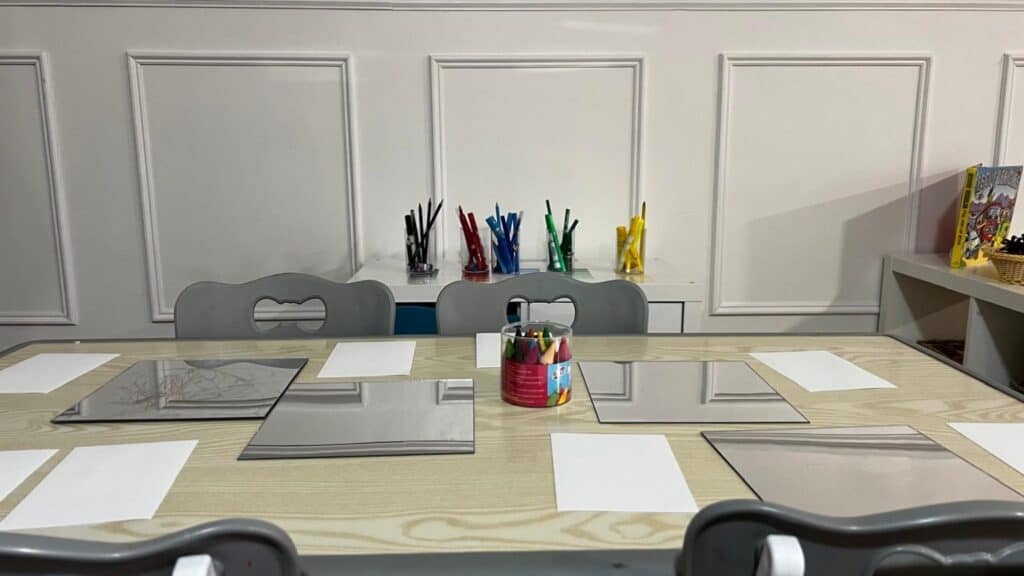
Intentional does not mean predetermined
We do prepare experiences. Sometimes we leave an area deliberately open. Sometimes we arrange an invitation. Sometimes a practitioner introduces a new material, idea, word or skill. Child-led practice does not mean adults are absent, and thoughtful intentional provision does not mean every experience must have a fixed outcome.
What matters is the reason behind what we offer. We want children to encounter a broad range of experiences across the Early Years Foundation Stage, while still having genuine agency within them. A practitioner may model, explain, introduce vocabulary, demonstrate a skill, join a developing story or offer just enough challenge to move thinking forward. At other times, the most useful thing an adult can do is observe and give an idea time. This responsive approach is at the heart of our in-the-moment planning, where practitioners use what they notice about children to decide how best to support and extend their learning.”
Sometimes we follow. Sometimes we guide. We should always know why.
Open-Ended Play and Learning Opportunities
The environment can offer possibilities without giving instructions – A basket of blocks. Real pots and utensils. Fabric. Mirrors and drawing materials. A cardboard box. An empty table.
These can all be purposeful resources, but they do not have to tell a child exactly what to do. A block may become part of a tower, a road, food in a pretend kitchen or something we had not imagined. A real utensil may prompt familiar home experiences, investigation, conversation or imaginative play. A real utensil may prompt familiar home experiences, investigation, conversation or imaginative play, where familiar objects and materials can take on entirely new meanings.
This is why we value open-ended resources that can be revisited and interpreted in different ways. The environment offers possibilities. The children give those possibilities meaning.
Open-ended play gives children the freedom to decide what materials mean and how they want to use them
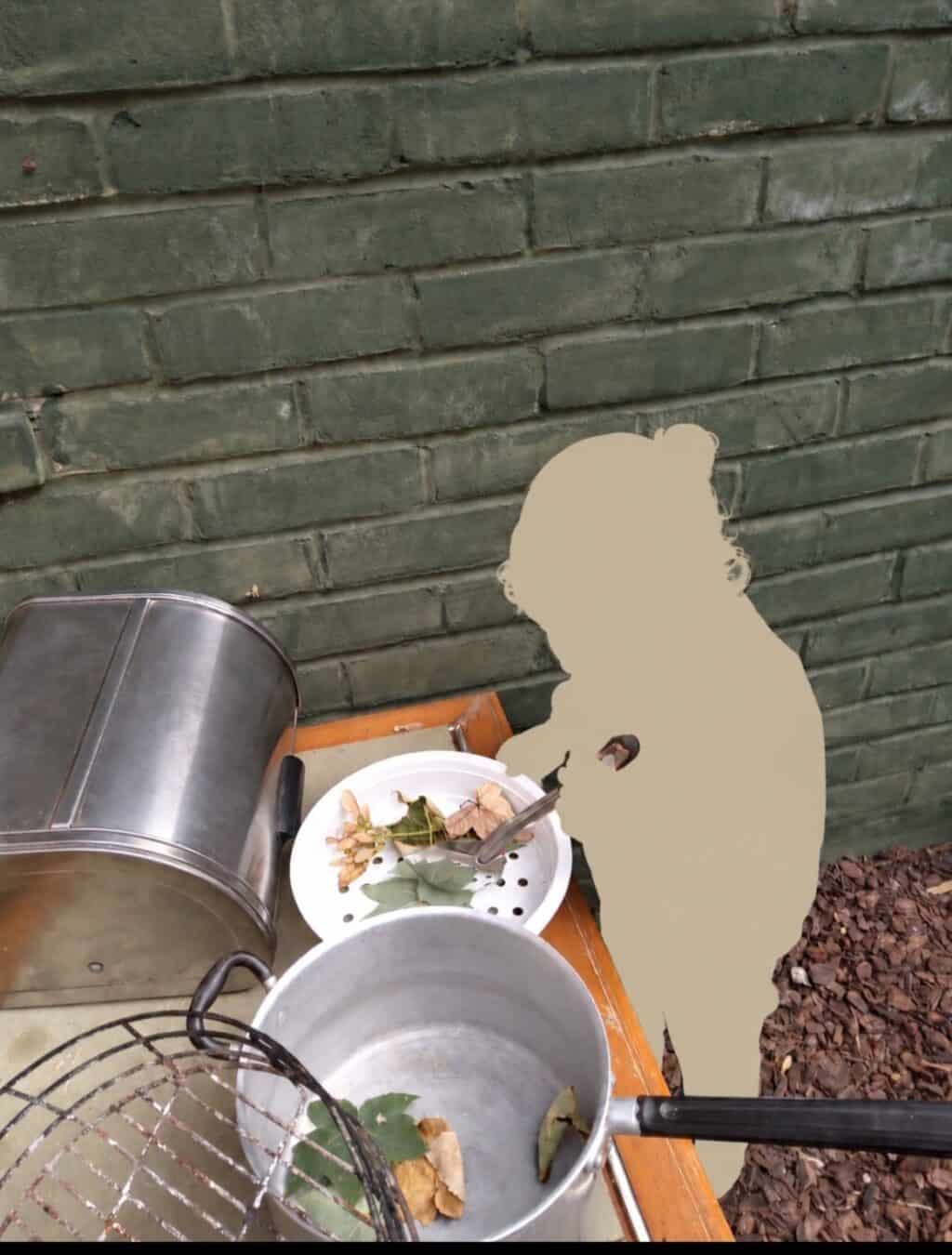
Observation: Looking beyond the activity
One of the most important parts of our work happens after the environment has been prepared: we watch.
It can be easy to describe play by naming the activity: building with blocks, mark making, sorting pasta, playing in the home corner. But that tells us very little about the child.
When we look more closely, we may notice the concentration needed to control a tool and develop fine motor skills, the language used to negotiate with another child, the determination behind rebuilding something that falls, a repeated pattern of transporting or enclosing, or the way a child changes strategy when the first attempt does not work.
Those details help practitioners understand what children already know and can do, where their interests are leading them and where sensitive adult support could deepen learning. Observation is not about producing paperwork for its own sake. It helps us decide what to say, what to model, what to add, what to change – and when not to interrupt.
Observation is an important part of early years practice. It helps practitioners understand what children already know.
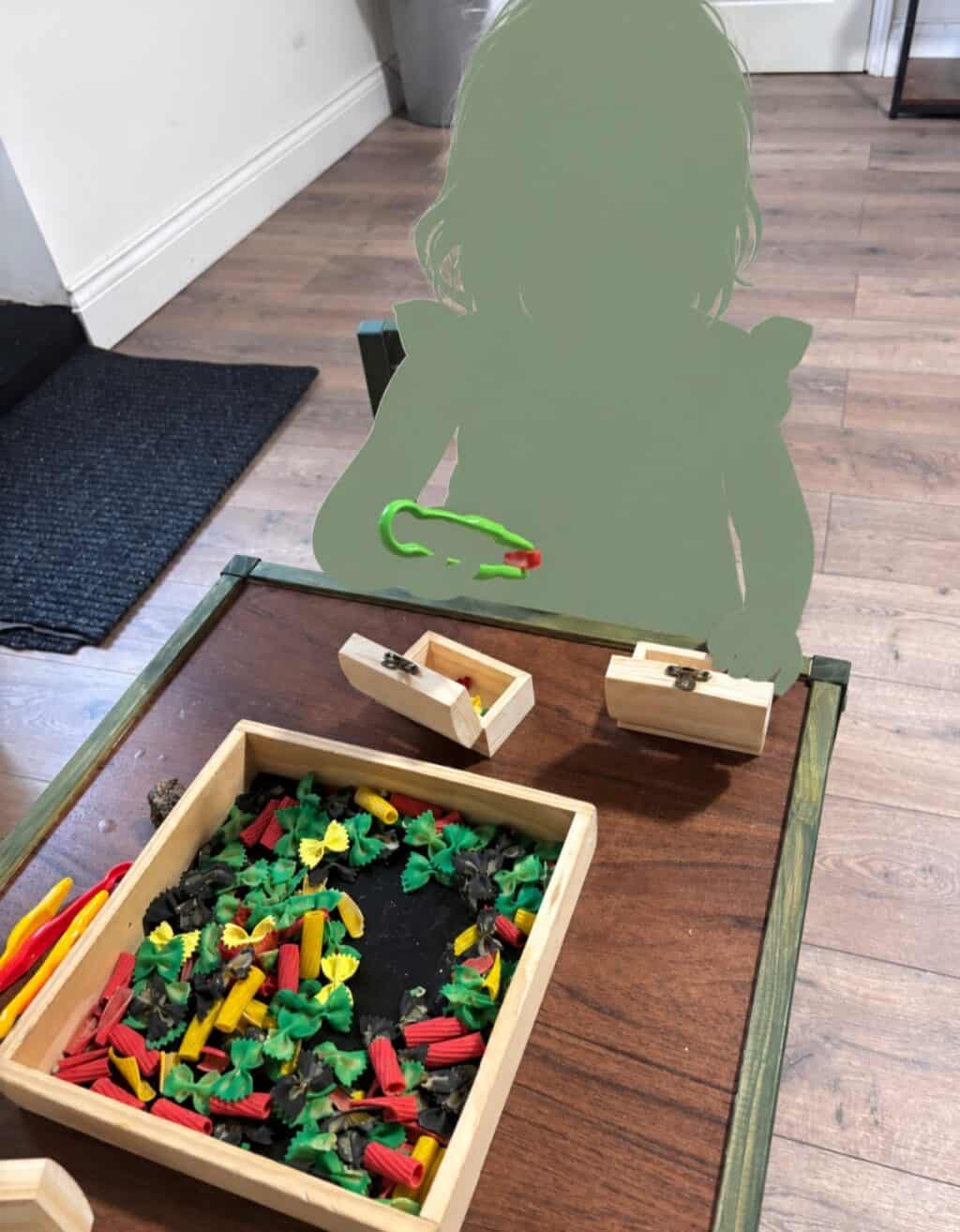
Repetition is part of learning
Children do not always need something new.
Across the month, we noticed children returning to familiar movements, ideas and ways of using materials. To an adult, repetition can look as though the same thing is happening again. For a child, each return can be another opportunity to practise, test a theory, strengthen a skill or add something to an emerging idea.
A responsive environment therefore needs continuity as well as novelty. We do not need to replace an experience simply because it has already been offered. Sometimes the next step is to allow more time. Sometimes it is to introduce one carefully chosen addition. Our role is to notice the difference.
Adapting the Early Years Learning Environment
A thoughtful environment is never really finished – we do not expect a Nook room to remain exactly as it looked when the doors opened in the morning.
Baskets are emptied. Cushions travel. Blocks move across the room. Resources from one area appear in another. Children gather in places we did not expect, and sometimes ignore the invitation we thought would interest them most.
That is useful information, not a problem to correct.
We notice where children become deeply involved, where the environment supports independence and connection, and where something is getting in the way. Then we respond. A resource might be added or removed. An area may move. More space may be created. A practitioner may join the play, introduce language or demonstrate a new possibility.
The cycle is simple: prepare, observe, understand, respond and adapt.
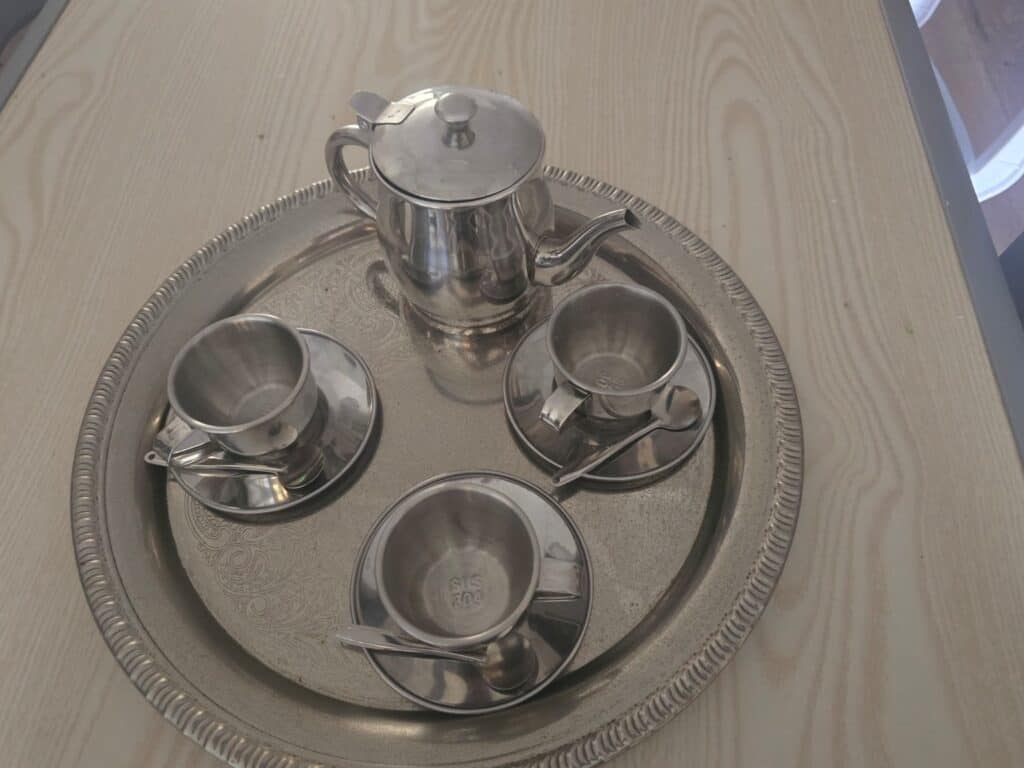
Calm does not mean untouched
We want The Nook to feel warm, welcoming and considered. Babies and young children need places where they can feel secure, move their bodies, communicate, investigate, be with others and sometimes retreat from the busyness around them.
But calm does not mean silent. Beautiful does not mean perfect. And a thoughtfully prepared room should never feel too precious for children to change.
We want our spaces to carry evidence of the people who use them: a half-finished construction, an object carefully transported across the room, a cushion moved because it was needed somewhere else, or an idea that has returned again and again.
These moments are part of the curriculum too. They show us children developing confidence, communication, physical skills, relationships, imagination, problem-solving and knowledge of their world.
We prepare the space. They bring the magic.
Our role as practitioners matters. We know the children, consider their starting points, plan for what they need to learn, choose resources carefully and create safe, welcoming spaces. We talk, model, explain, demonstrate, encourage and challenge. We make sure children encounter experiences they may not discover by themselves.
And then we leave room.
Room to choose. Room to repeat. Room to change direction. Room to involve someone else. Room to make a mistake and try again. Room for an ordinary object to become something entirely different.
For us, thoughtful environments are not about creating a perfect photograph. They are about creating the conditions in which children can feel secure, curious, capable and involved in their own learning.
Perhaps the most thoughtful environment is not the one where adults have thought of everything. It is the one where adults have thought carefully enough to leave space for the child.
At The Nook Nursery in Leyton, we have created our environment with this balance in mind: warm and calm enough to help children feel secure, but open and flexible enough for their ideas to shape what happens next.
We prepare the space. They bring the magic.